What Is Offset Printing Services?
When you need 5,000 brochures that all look sharp, match your brand colors, and hold up from the first sheet to the last, the question becomes practical fast: what is offset printing services, and when is it the right choice for your business? If you manage marketing, procurement, or brand consistency across locations, this matters because the print method affects quality, turnaround, and unit cost.
Offset printing is a commercial print process that transfers ink from a metal plate to a rubber blanket, then onto paper or card stock. The term “offset” comes from that indirect transfer. Instead of printing straight from plate to sheet, the image is first offset onto the blanket, which helps produce clean, consistent results across long runs.
For business printing, offset is often the go-to method for high-volume jobs where color accuracy, detail, and repeatability matter. Think brochures, catalogs, presentation folders, flyers, magazines, stationery, posters, NCR books, and other branded materials that need to look polished every time.
What is offset printing services in plain terms?
Offset printing services are the commercial production services built around that offset press process. In real-world terms, that means a print partner handles the setup, plates, press calibration, paper selection, color management, finishing, and delivery for larger print runs.
It is not just about putting ink on paper. A proper offset printing service usually includes prepress checks, artwork setup, proofing, stock advice, finishing options such as folding or binding, and quality control through the run. For many businesses, that support is just as valuable as the press itself.
If you are ordering print regularly, especially across multiple items or locations, offset services can also bring consistency. The same colors, the same paper standards, and the same finishing approach can be repeated from job to job, which is a big deal for franchise groups, real estate networks, and brand-managed organizations.
How offset printing works
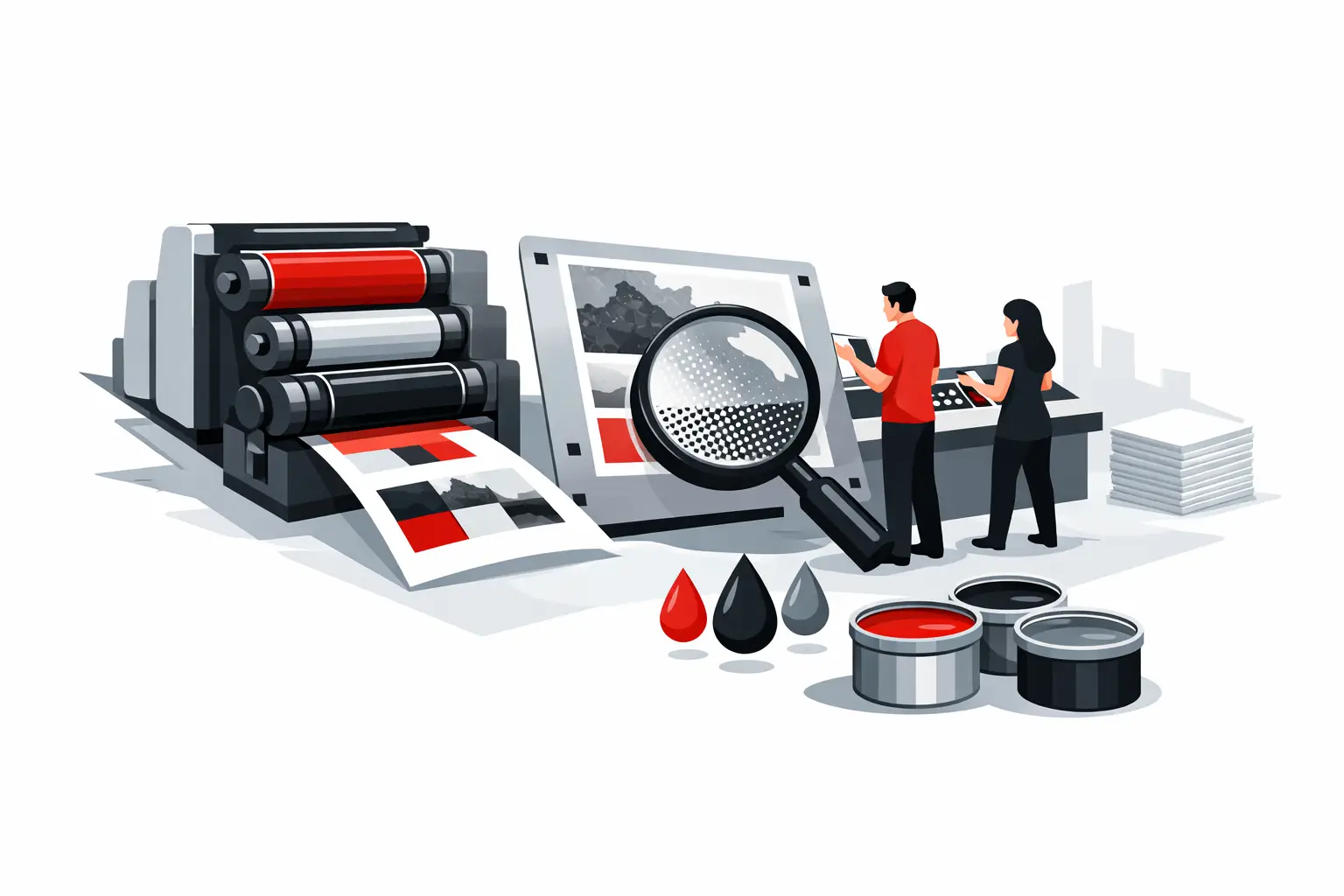
At a high level, the process is straightforward, even if the machinery behind it is highly technical. Your artwork is prepared for print and separated into color components. Plates are created for each ink color. On press, those plates transfer the image to rubber blankets, and the blankets apply the ink to the paper as sheets move through the machine.
For full-color work, offset usually uses CMYK – cyan, magenta, yellow, and black. If your brand relies on a very specific color, spot colors such as Pantone inks can also be used. That is one reason offset remains popular for businesses that need tighter color control than many digital jobs can offer.
The setup stage takes time and skill. That is why offset is not always the cheapest option for a small batch of 50 flyers. But once the press is set and running, the cost per unit drops significantly, making it highly efficient for medium to large quantities.
Why businesses choose offset printing
The biggest reason is consistency at scale. A business can print thousands of pieces with strong image quality and dependable color from start to finish. If you are sending out a direct mail campaign, producing product booklets, or supplying printed collateral to several branches, that level of consistency protects your brand.
Offset also gives you more flexibility with materials. It performs well on a wide range of paper stocks and finishes, from uncoated stationery to heavier gloss and specialty stocks. That opens up more options for how your printed piece feels in the hand, which still matters in sales, presentations, events, and customer communications.
Then there is value. Offset usually comes with a higher setup cost than digital printing, but it can become more cost-effective as quantities rise. For 2,000, 5,000, or 20,000 copies, businesses often find offset gives them a better unit price without sacrificing presentation.
Offset vs digital printing
This is where many print decisions are really made. Offset is excellent for longer runs, color consistency, and premium results. Digital printing is usually better for short runs, fast turnarounds, and jobs that require variable data, such as personalized names or addresses.
Neither method is “better” across the board. It depends on what you are printing, how many you need, how quickly you need them, and whether each piece needs to be identical or customized.
If you need 250 event flyers tomorrow, digital may be the smarter move. If you need 10,000 product brochures with accurate brand colors and a lower unit cost, offset is often the better fit. A good print partner should tell you that plainly, not push one method for every job.
What kinds of jobs suit offset printing services?
Offset shines when volume and quality need to work together. It is commonly used for brochures, magazines, annual reports, catalogs, stationery sets, presentation folders, booklets, manuals, forms, and promotional print that has to look consistent over larger quantities.
It also suits campaigns with multiple components. For example, if a marketing team needs inserts, flyers, folders, and reply forms produced together, offset can create a uniform result across the set. That is useful when your materials are going to clients, investors, franchisees, or sales teams who expect a professional standard.
In sectors where compliance and brand control matter, offset can reduce surprises. That is one reason larger businesses and agencies often rely on it for repeat work rather than shopping every print run on price alone.
The quality advantages of offset printing
Offset printing is known for crisp detail, clean solids, and reliable color reproduction. Fine typography tends to reproduce well, and images can hold subtle tonal variation better across long runs. That makes a difference for corporate brochures, lookbooks, reports, and printed pieces where the brand image carries real weight.
Another advantage is color stability. Once the press is dialed in, the result can stay highly consistent through the job. That matters if your materials need to match previous runs or sit alongside other branded assets.
There is also the tactile side of print. The combination of stock choice, ink coverage, and finishing can create a more substantial, premium feel. For many businesses, especially those selling high-value products or services, that physical impression supports credibility.
Where offset printing has trade-offs
Offset is not the answer for everything. The setup process takes longer than digital, so it is less suited to urgent short-run jobs. If you only need a small quantity, the setup cost can outweigh the savings.
It is also less flexible for versioning. If you need five versions of a flyer with different offers or location details, digital may handle that more efficiently. Offset is built for consistency, not rapid personalization.
And while offset can be fast once underway, it still depends on planning. Artwork approval, proofing, stock selection, finishing, and freight all need to be managed properly. Businesses that leave print to the last minute often end up limiting their options.
What to ask before ordering offset printing services
If you are considering offset, start with the basics: quantity, finished size, stock, number of pages, color requirements, and deadline. Then think about how the piece will actually be used. Will it be mailed, handed out, displayed, inserted into folders, or stored for ongoing use? Those details affect production choices more than many buyers expect.
It also helps to ask about finishing early. Folding, stitching, perforating, numbering, laminating, or binding can change both cost and schedule. So can packaging and fulfillment if your print needs to go to multiple offices or campaign sites.
Most importantly, ask whether offset is truly the best fit for the job. A dependable print provider will guide you based on outcome, not just machinery. That kind of practical advice saves money, avoids rework, and keeps the project moving.
Why service matters as much as the press
Businesses rarely need just a printer. They need a partner who can catch artwork issues before they become delays, recommend a smarter stock when budget is tight, and keep production on track when deadlines are fixed.
That is where offset printing services become more than a technical process. The value is in the support around the job – quoting clearly, checking files carefully, managing quality, and delivering a finished product that does what it needs to do. For teams ordering print across multiple campaigns or locations, that reliability matters every bit as much as the final sheet.
At Dynamite Printing, that is the practical side of commercial print we take seriously: helping customers make the right production choice, then seeing the job through properly.
If you are weighing up offset for your next project, the best question is not whether it is an old-school method or a modern one. It is whether it will give your business the right mix of quality, consistency, timing, and value for the job in front of you.