What Is Commercial Printing?
A rushed office print run and a true business-grade print job are not the same thing. If you have ever tried to produce branded brochures, folders, signage, forms, or direct mail in-house, you already know where the gap shows up – color consistency, paper quality, finishing, turnaround, and the simple reality of volume. That is where commercial printing comes in.
What is commercial printing?
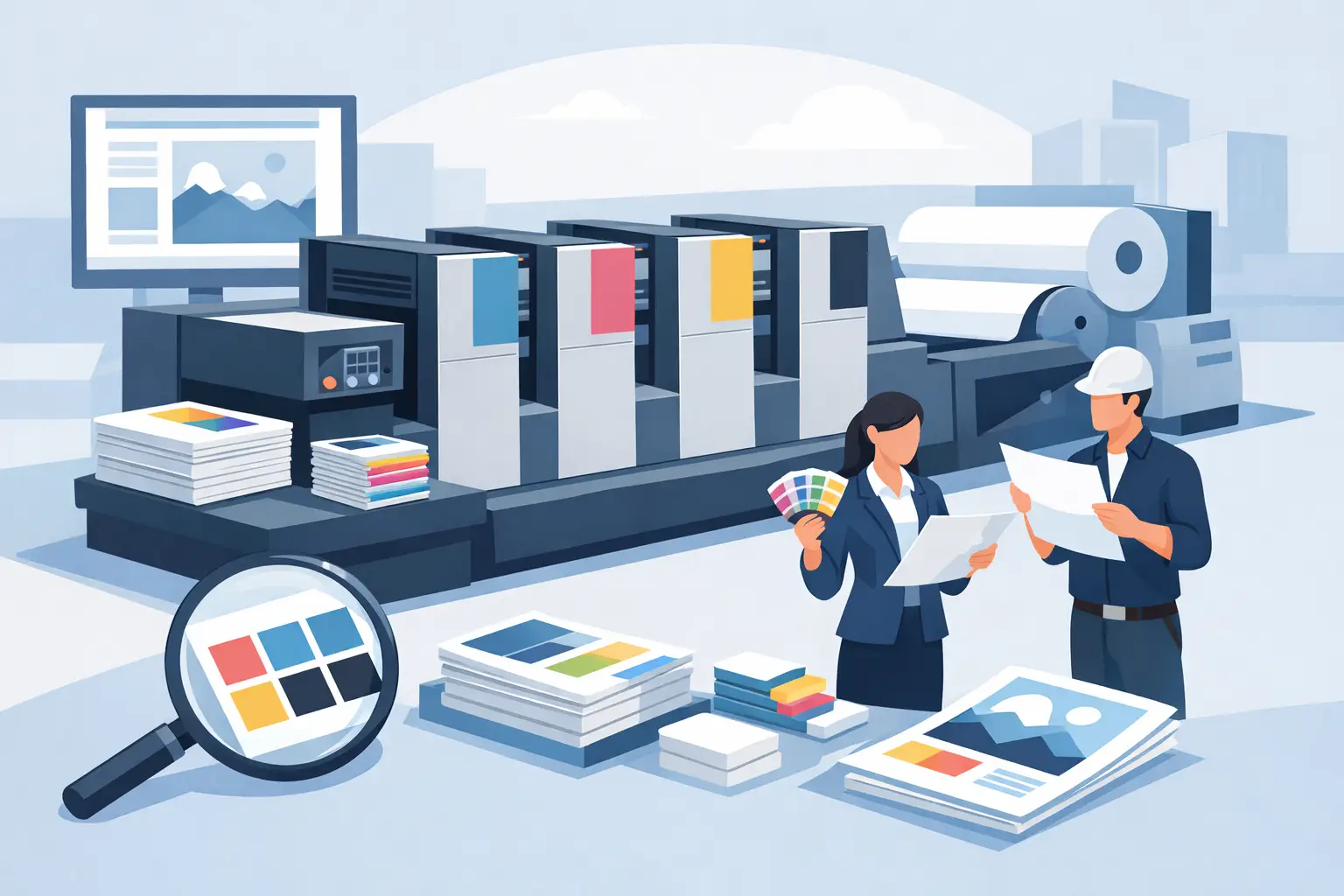
What is commercial printing? In simple terms, it is the professional production of printed materials for business, marketing, operational, and promotional use. It covers far more than putting ink on paper. Commercial printing usually includes prepress setup, file checks, color management, press production, finishing, packaging, and in many cases delivery or fulfillment.
The key difference is scale and purpose. Commercial printing is built for organizations that need quality, repeatability, and efficiency across larger quantities or more demanding specifications. That might mean company stationery, sales brochures, magazines, NCR books, presentation folders, retail signage, outdoor banners, or promotional products that need to match brand standards.
For most businesses, commercial printing is not just about making something look good. It is about getting the job done right, on budget, and on time.
How commercial printing works in practice
A commercial print job usually starts well before anything reaches a press. Files need to be reviewed for size, bleed, resolution, color setup, and finishing requirements. If artwork is not ready, design support may be part of the process. This early stage matters because production problems are usually cheaper to fix before printing starts.
Once artwork is approved, the job moves into production. Depending on the quantity, stock, format, and deadline, the printer may use digital or offset equipment. After printing, the job may need trimming, folding, binding, laminating, scoring, perforating, numbering, or packing into sets. For some projects, that is only the halfway point. Mailing, kitting, warehousing, and distribution can also sit under the commercial printing umbrella.
That end-to-end approach is what many business buyers actually need. They are not looking for a press alone. They are looking for a reliable production partner who can keep the job moving.
What is included in commercial printing?
Commercial printing covers a wide range of business materials. Some items are everyday essentials, while others are campaign-specific or industry-specific.
Common examples include business cards, letterheads, envelopes, brochures, flyers, booklets, magazines, annual reports, posters, catalogs, presentation folders, labels, NCR books, and product sheets. It also includes large-format work such as pull-up banners, wall graphics, window decals, vehicle graphics, site signage, and outdoor banners.
For many companies, branded merchandise also overlaps with commercial printing. That can include printed promotional products used for trade shows, onboarding packs, events, and client giveaways.
The exact mix depends on the business. A real estate group may need signboards, brochures, window cards, and recurring office stationery. A franchise network may need tightly controlled branded collateral across multiple locations. A marketing department may need campaign materials delivered to different branches on strict deadlines. In each case, the print requirement is different, but the need for consistency is the same.
Commercial printing vs. home or office printing
The easiest way to understand commercial printing is to compare it with what it is not.
Office printers are useful for internal documents, quick proofs, and low-volume tasks. They are not designed for color-critical marketing materials, premium stocks, complex finishing, or efficient large-run production. If your brand relies on polished presentation, office output usually starts to show its limits very quickly.
Commercial printing offers better control over paper stocks, print quality, finishing options, and production speed at volume. It also gives you access to equipment and expertise that most businesses do not have in-house. That includes everything from precise color matching to saddle stitching, perfect binding, die cutting, variable data printing, and coordinated mailing.
Of course, it depends on the job. If you need ten internal reference sheets, your office printer is fine. If you need 10,000 branded flyers with accurate color, clean trimming, and reliable delivery, commercial printing is the better fit.
The main types of commercial printing
Most business buyers do not need to know every technical detail, but it helps to understand the two main production methods.
Digital printing
Digital printing is often the right choice for shorter runs, faster turnarounds, and jobs that require variable information. It works well for brochures, flyers, booklets, business cards, and direct mail where names, addresses, or offers may change from one piece to the next.
The setup is generally faster, which can make digital more cost-effective at lower quantities. It is also useful when you need to reprint in smaller batches rather than commit to one large run.
Offset printing
Offset printing is usually better suited to larger volumes and jobs where color consistency and unit cost matter over longer runs. It remains a strong option for magazines, catalogs, stationery, presentation materials, and other high-volume branded print.
Offset often gives you more flexibility with certain stocks, inks, and finishing effects. The trade-off is that setup takes more time, so it is not always the best choice for short runs or urgent jobs.
A good commercial printer will not push one method for everything. They will match the production method to the result you need.
Why businesses use commercial printing
Businesses use commercial printing because print still does a specific job well. It creates something physical, credible, and usable in a way that digital alone cannot always replace.
Sales teams need leave-behind materials that feel professional. Retail businesses need signage that gets noticed. Corporate offices need forms, folders, and branded stationery that support a consistent image. Marketing teams need campaign assets that arrive on time and look the same across every location.
There is also an operational side to it. A dependable commercial printer reduces friction. Instead of chasing multiple suppliers for design adjustments, print production, finishing, dispatch, and restocks, businesses can keep those moving parts under one roof. That saves time, cuts errors, and makes recurring orders easier to manage.
For larger organizations, consistency is often the deciding factor. If several branches, franchisees, or departments are ordering materials, commercial printing helps keep brand presentation under control.
What to look for in a commercial printing partner
Not every printer is set up to support business customers properly. Some are geared toward one-off jobs. Others are better built for repeat work, branded systems, and more complex production.
A strong commercial printing partner should be able to guide you on stock, format, finishing, and production method based on your budget and deadline. They should catch artwork issues early, quote clearly, and communicate honestly about turnaround times. If your project includes multiple items or delivery points, they should have the systems to coordinate that without creating extra work for your team.
This is especially important when the job has no room for guesswork. Brand-sensitive campaigns, property marketing packs, event collateral, point-of-sale signage, and recurring franchise materials all need careful handling.
That is why many businesses prefer working with a full-service provider instead of treating print as a commodity purchase. The cheapest unit price can become expensive very quickly if the files are wrong, the finish is poor, or the delivery misses the window.
When commercial printing makes the most sense
Commercial printing makes sense when quality, quantity, consistency, or complexity go beyond what basic print methods can handle. If the item represents your brand publicly, supports sales activity, or needs to be reproduced accurately again and again, professional production is usually worth it.
It is also the right call when timing matters. Product launches, property campaigns, seasonal promotions, trade shows, and national rollouts all leave very little room for rework. In those situations, experienced print support is not an extra. It is part of risk management.
For businesses managing multiple print needs at once, it helps to have one team that can handle the lot. That is where a company like Dynamite Printing adds real value – not just by producing the pieces, but by helping customers move from concept to finished result with less stress and better control.
Commercial printing is, at its core, about dependable execution. When your print has to work as hard as your team does, it pays to treat it like a business asset, not an afterthought.