What Is Digital Printing Services?
A marketing team needs 250 brochures for a product launch next week. A real estate office needs branded signboards updated by Friday. A franchise group wants consistent flyers across multiple locations without ordering massive stock. That is exactly where the question what is digital printing services starts to matter.
Digital printing services are professional print solutions that produce artwork directly from a digital file onto paper, card, vinyl, labels, or other materials without the setup involved in traditional offset printing. For businesses, that usually means faster turnaround, easier version changes, lower minimum quantities, and a more practical way to manage everyday print jobs.
That sounds simple enough, but the real value is in how digital printing fits the way businesses actually buy print. Most companies do not need one giant run of a single item and then nothing for six months. They need the right quantity, on the right stock, finished properly, and delivered on time.
What is digital printing services in practical terms?
In practical terms, digital printing services cover the full process of taking your artwork, preparing it for production, printing it, finishing it, and getting it ready for use or distribution. The printing itself happens from digital files such as PDFs or packaged design files, which are sent to a digital press or large-format production device.
The service part is what many buyers care about most. A good print partner does more than just press print. They help check artwork, recommend stock, confirm size and finishing, flag potential issues, and make sure the final product suits the job. That matters whether you are ordering business cards, presentation folders, booklets, posters, variable data mailers, or point-of-sale signage.
For business customers, digital printing often sits in the sweet spot between speed, quality, and flexibility. It is especially useful when deadlines are tight, quantities are moderate, or artwork needs to change from version to version.
How digital printing works
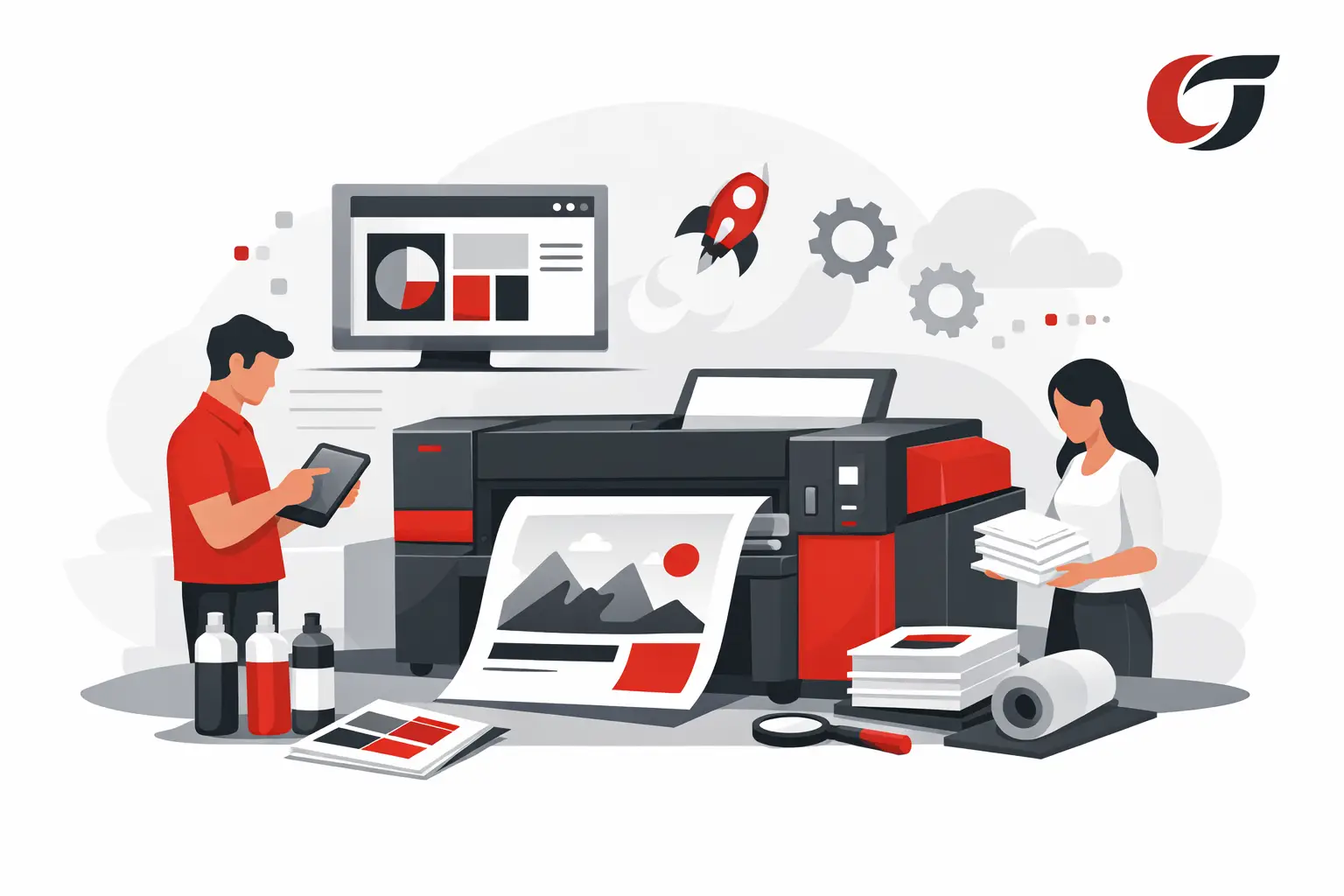
The process starts with a digital file. That file is reviewed for size, bleed, resolution, color setup, and any finishing requirements. Once approved, it is sent to the appropriate device depending on the job type.
For brochures, flyers, booklets, and stationery, that may be a production digital press. For posters, banners, decals, and display graphics, it may be a large-format printer. From there, the job moves into finishing, which can include trimming, folding, scoring, laminating, binding, numbering, or packing by location.
Compared with offset printing, there is less setup at the front end. There are no plates to make, which reduces prep time and makes short to mid-size runs more economical. That is one reason digital printing is commonly used for repeat business materials, campaign collateral, and fast-turnaround branded items.
Where digital printing services are used
Digital printing covers a wide range of commercial applications. Most business buyers come across it more often than they realize.
Common examples include brochures, flyers, postcards, booklets, catalogs, folders, letterheads, NCR books, posters, menus, labels, direct mail pieces, presentation materials, and promotional inserts. It also includes branded signage such as pull-up banners, counter cards, wall graphics, vehicle decals, and event displays.
If your business needs print that looks professional and arrives without drama, there is a good chance digital printing is part of the solution.
Why businesses choose digital printing
Speed is the first reason. When a job needs to move quickly, digital printing is usually the practical option. The reduced setup time helps shorten production schedules, which is useful for campaign launches, sales presentations, new store openings, and event deadlines.
Flexibility is the second. Digital printing makes it easier to print smaller batches, test different versions, or update details without wasting old stock. That is helpful for businesses that change pricing, services, offers, or compliance information regularly.
Consistency is another major factor. For companies managing multiple branches, franchise locations, or recurring campaigns, digital workflows help maintain a reliable output from job to job. That does not mean every substrate behaves exactly the same, but with proper file setup and production control, digital print can deliver very dependable results.
Then there is cost control. If you only need 100 folders, 250 flyers, or 20 posters, digital printing can be more cost-effective than ordering a large run just to hit a lower unit price. Buying what you need now, rather than tying up budget in excess stock, is often the smarter business decision.
Digital printing vs offset printing
This is where some nuance matters. Digital printing is not automatically better than offset printing. It depends on the job.
Digital printing is generally better for shorter runs, fast turnaround, variable data, and jobs that may need updates. Offset printing often becomes more economical on very high volumes and can offer advantages for certain specialty colors, exact brand matching requirements, or specific finishing expectations.
If you are printing a limited run of sales brochures for next month, digital is often the right fit. If you are producing tens of thousands of identical catalogs, offset may deserve a closer look. Many businesses need both at different times, and a capable print partner should guide that decision based on quantity, timing, budget, and end use.
What to expect from a professional digital printing service
Not all print providers offer the same level of support. Some simply take files and output them. Others take ownership of the result.
A professional digital printing service should help you get the basics right before production starts. That includes checking artwork, advising on stock options, explaining finishing choices, and making sure the final item is fit for purpose. A folded brochure for a sales kit, for example, has different requirements than a handout for a trade show. The paper weight, finish, folding style, and packing method all affect usability.
You should also expect clear quoting, realistic turnaround times, and honest advice if a job needs a different production method. That kind of support becomes even more valuable when a project includes multiple items, brand rules, or delivery to several locations.
For larger organizations, digital printing services can also include online ordering portals, templated collateral, and repeat-order systems that reduce internal admin and help keep branding consistent.
What is digital printing services best suited for?
The short answer is everyday commercial print that needs to be fast, flexible, and professionally produced.
It is especially well suited to marketing collateral, sales materials, branded stationery, short-run booklets, direct mail, event graphics, retail signage, and versioned print where names, locations, or offers change. It is also ideal for businesses that do not want to warehouse outdated stock.
That said, not every job belongs on a digital press. Very long runs, unusual specialty inks, or projects with highly specific production demands may call for a different method. The right supplier will tell you that up front instead of forcing every job into the same process.
Common misconceptions about digital printing
One misconception is that digital printing is only for cheap or basic jobs. That is outdated thinking. Modern digital equipment can produce sharp text, strong image quality, and polished business materials suitable for corporate, retail, and agency use.
Another misconception is that digital printing means no human involvement. In reality, good results still depend on prepress checks, color management, finishing accuracy, and production judgment. The technology is important, but the people behind it still make a major difference.
There is also a tendency to assume faster means rushed. Fast turnaround should not mean cutting corners. A well-run print operation can move quickly while still managing quality, consistency, and finishing standards properly.
How to decide if digital printing is right for your project
Start with four questions. How many do you need? How quickly do you need them? Will the content change? What does the finished piece need to do?
If the quantity is moderate, the deadline is tight, or the artwork may need revisions or multiple versions, digital printing is often the sensible choice. If the piece is customer-facing and reflects your brand, do not judge the job on print method alone. Judge it on whether the final product will look right, perform well, and arrive when you need it.
That is why many businesses work with a print partner instead of chasing the lowest online price. The cheapest order is not a bargain if the colors are off, the stock feels wrong, or the deadline slips.
At its best, digital printing is not just a machine process. It is a reliable production method backed by practical advice, quality control, and people who know how to get the job done. If your print needs change often, carry deadlines, or involve multiple pieces working together, that support is what turns a print order into a successful project.