Digital vs Offset Printing: Which Fits Best?
A rushed brochure order, a 5,000-piece direct mail campaign, a set of branded folders for a pitch, and a short-run booklet with variable names on each copy do not belong on the same press. That is why digital vs offset printing is not just a technical question. It is a budget, timing, quality, and workflow decision that affects the final result.
For business buyers, the right choice usually comes down to what you are printing, how many you need, how fast you need them, and how tightly the finished piece needs to match your brand standards. Both methods can produce excellent work. The difference is in where each one performs best.
Digital vs offset printing at a glance
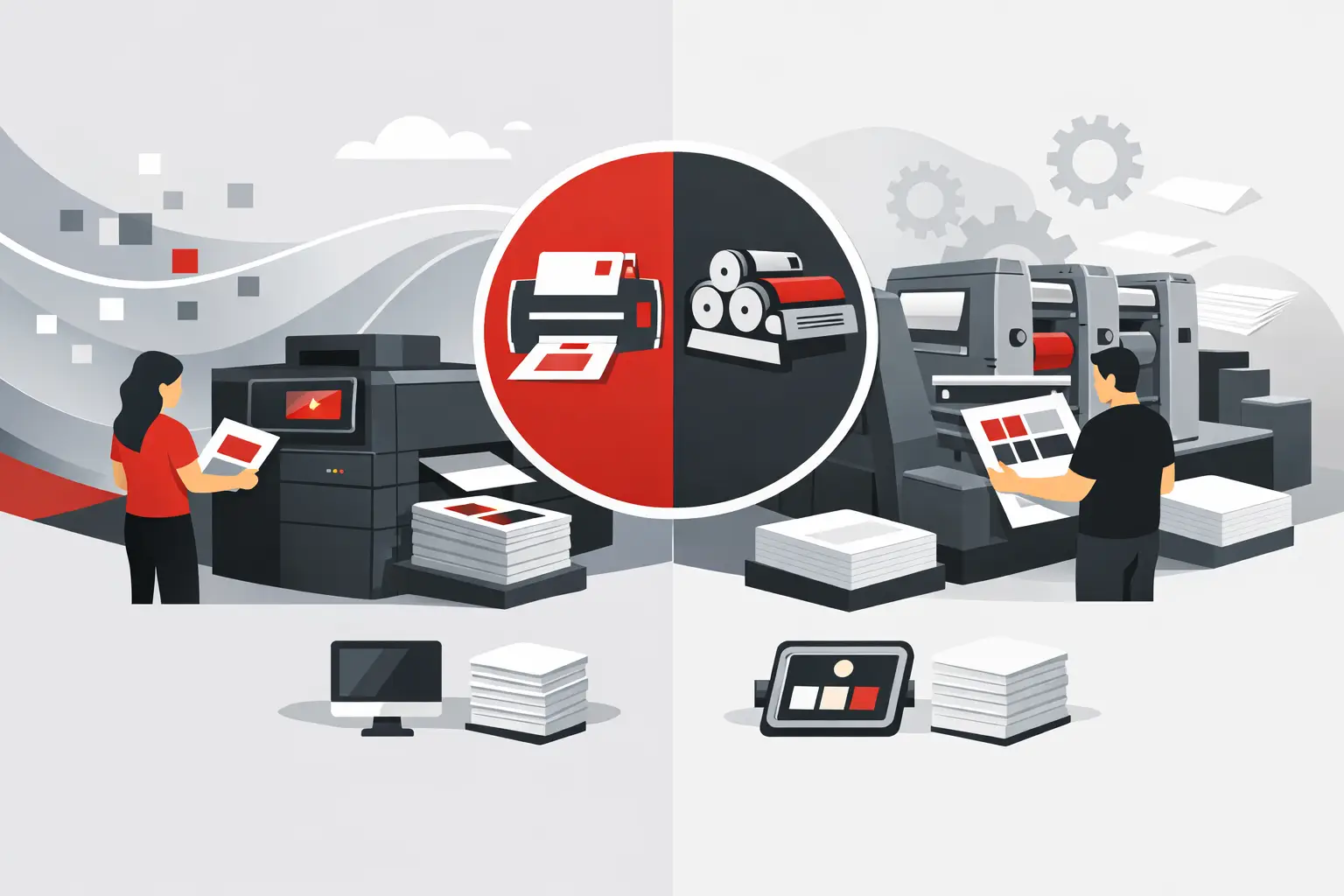
Digital printing sends artwork directly from file to press. There are no plates, setup is faster, and it is ideal for shorter runs, quick turnarounds, and jobs that need versioning or personalization.
Offset printing uses metal plates and ink transferred through rollers onto paper. Setup takes more time, but it becomes highly efficient for larger quantities and is known for strong color consistency, sharp detail, and broad stock flexibility.
If you are ordering 100 flyers for an event next week, digital often makes more sense. If you are printing 20,000 brochures for a national rollout, offset will usually give you a better unit cost and tighter control across the full run.
How digital printing works in real business use
Digital printing is built for speed and flexibility. Files move straight into production, which cuts out plate-making and much of the upfront setup. That makes it a practical option when deadlines are tight or quantities are modest.
For many business materials, that is a major advantage. Sales sheets, presentation folders with inserts, short-run booklets, event handouts, real estate flyers, and fast-moving campaign collateral are common digital jobs because they need to be turned around quickly and updated often.
Digital also handles variable data well. If each mail piece needs a different name, address, code, or offer, digital is often the smarter route. That matters for direct mail, franchise group campaigns, membership renewals, and other targeted communications where one-size-fits-all printing misses the mark.
The trade-off is that digital is not always the cheapest option once quantities climb. The per-piece cost stays relatively steady, so while it is efficient for short to medium runs, it can become less economical than offset at higher volumes.
How offset printing works when consistency matters
Offset printing rewards scale. There is more setup at the start because plates have to be created and the press must be calibrated, but once the job is running, it becomes very cost-effective over large quantities.
This is where offset stands out for businesses that need dependable, repeatable print across long runs. Think annual reports, magazines, catalogs, bulk brochures, stationery programs, NCR books, and branded materials that need to look consistent from the first sheet to the last.
Offset also offers excellent control over ink and paper combinations. If a project uses specialty stocks, precise brand colors, or finishing requirements that need a stable print base, offset often gives more room to get the result exactly right.
That does not mean offset is always better. It means offset is often better for the kinds of jobs where volume, brand control, and print feel matter more than same-day speed.
Cost: where digital and offset really separate
Cost is usually the first question, but it is also the one that gets oversimplified most often.
Digital printing tends to win on short runs because the setup is minimal. If you only need a few dozen, a few hundred, or in some cases a few thousand pieces, digital can keep the total job cost lower. You are not paying for plates and lengthy press setup before the first usable sheet appears.
Offset printing usually wins on larger runs because the setup cost is spread across many more units. The more you print, the lower the cost per piece tends to become. At a certain quantity threshold, offset starts making stronger commercial sense.
That threshold is not fixed. It depends on the format, stock, number of colors, finishing, and whether the job includes versioning. A simple flyer may switch to offset economics at a different volume than a stitched booklet or a pocket folder.
This is why experienced guidance matters. The cheapest method on paper is not always the best value if it creates compromises in quality, timing, or finishing.
Quality: the question is not good or bad
When customers ask about quality in digital vs offset printing, they are often expecting a winner. In practice, both can look excellent. The better question is what kind of quality matters most for your job.
Digital printing has come a long way. For many everyday commercial applications, the output is sharp, professional, and more than suitable for customer-facing use. Most business buyers would be pleased with well-produced digital brochures, flyers, sales kits, and short-run marketing pieces.
Offset printing still has an edge in certain areas. It can offer more precise color matching, especially for brand-critical work and Pantone-based requirements. It also performs exceptionally well on long runs where visual consistency needs to stay tight from beginning to end.
If your brand guidelines are strict, your audience is detail-focused, or the piece is intended to carry more weight, such as a premium booklet, presentation piece, or high-volume campaign, offset may be the safer call.
Speed and turnaround
If the deadline is aggressive, digital has a clear advantage. Faster setup means production can begin sooner, and that often shortens the full schedule.
For time-sensitive jobs, this matters. A marketing team may need updated brochures for a trade show. A real estate office may need fresh property flyers by tomorrow. A franchise network may need local store materials updated with new pricing. Digital is built for that kind of responsiveness.
Offset takes more planning. That is not a flaw. It is simply part of the process. For larger campaigns with enough lead time, the setup pays off. But if the job changed this morning and needs to ship fast, digital is usually the more practical choice.
Paper, finishes, and special requirements
Paper choice changes everything. The same artwork can feel inexpensive or premium depending on stock, coating, and finishing.
Offset printing is often the stronger option when a project involves unusual stocks, large sheet sizes, exact ink behavior, or more specialized finishing expectations. It gives printers more control over how the job is built from the ground up.
Digital is highly capable, but it can have limitations depending on the press, stock compatibility, and finishing path. That does not make it second best. It just means the method needs to fit the spec.
If you are printing a simple postcard on a standard coated stock, either method may be suitable depending on quantity. If you are producing a complex branded piece with custom folds, premium stock, and exact color targets, offset may offer better control.
Which print method is right for your job?
The easiest way to choose is to match the print method to the business goal.
Digital is usually the right fit when you need shorter runs, fast turnaround, variable data, frequent content updates, or multiple versions in the same campaign. It works well for test campaigns, sales materials, event collateral, and jobs where flexibility matters.
Offset is usually the right fit when you need higher volumes, lower unit costs at scale, strong color consistency, premium presentation, or broad stock and finishing options. It is a strong choice for large brochure runs, magazines, stationery systems, and brand-sensitive print programs.
Many businesses need both. That is the real answer more often than not. One campaign may use offset for the main brochure run and digital for localized inserts, updated sales sheets, or personalized direct mail. The smartest print strategy is not loyalty to one method. It is using the right process at the right stage.
Why expert advice saves money
Print buying gets expensive when the specification is wrong at the start. A job can be priced cheaply and still cost more overall if it misses the deadline, fails brand expectations, or needs to be rerun.
That is why a good print partner asks questions before recommending a method. What is the quantity? Does the artwork change often? Are there multiple versions? Does the stock matter? Is color match critical? Is this a one-off job or part of an ongoing program?
Those details shape the right production path. At Dynamite Printing, that practical, start-to-finish thinking is part of making the project work, not just getting it on press.
If you are comparing digital vs offset printing, the best choice is the one that supports your timeline, your budget, and the standard your brand needs to hit. Get that match right, and print stops being a production problem and starts doing the job it was meant to do.