What an Online Print Ordering Portal Should Do
If your team is still ordering print by email threads, old PDFs, and scattered approvals, the problem usually is not print. It is process. A good online print ordering portal gives businesses one place to manage repeat orders, approved artwork, user access, brand rules, and delivery details without the usual back-and-forth.
For marketing teams, franchise groups, real estate offices, and multi-location businesses, that matters more than convenience. It affects brand consistency, turnaround times, cost control, and how much internal time gets wasted chasing simple jobs. When print is ordered often, by different people, across different locations, the right system stops small errors from becoming expensive ones.
What an online print ordering portal actually solves
Most businesses do not need another piece of software. They need fewer avoidable mistakes. That is where an online print ordering portal earns its place.
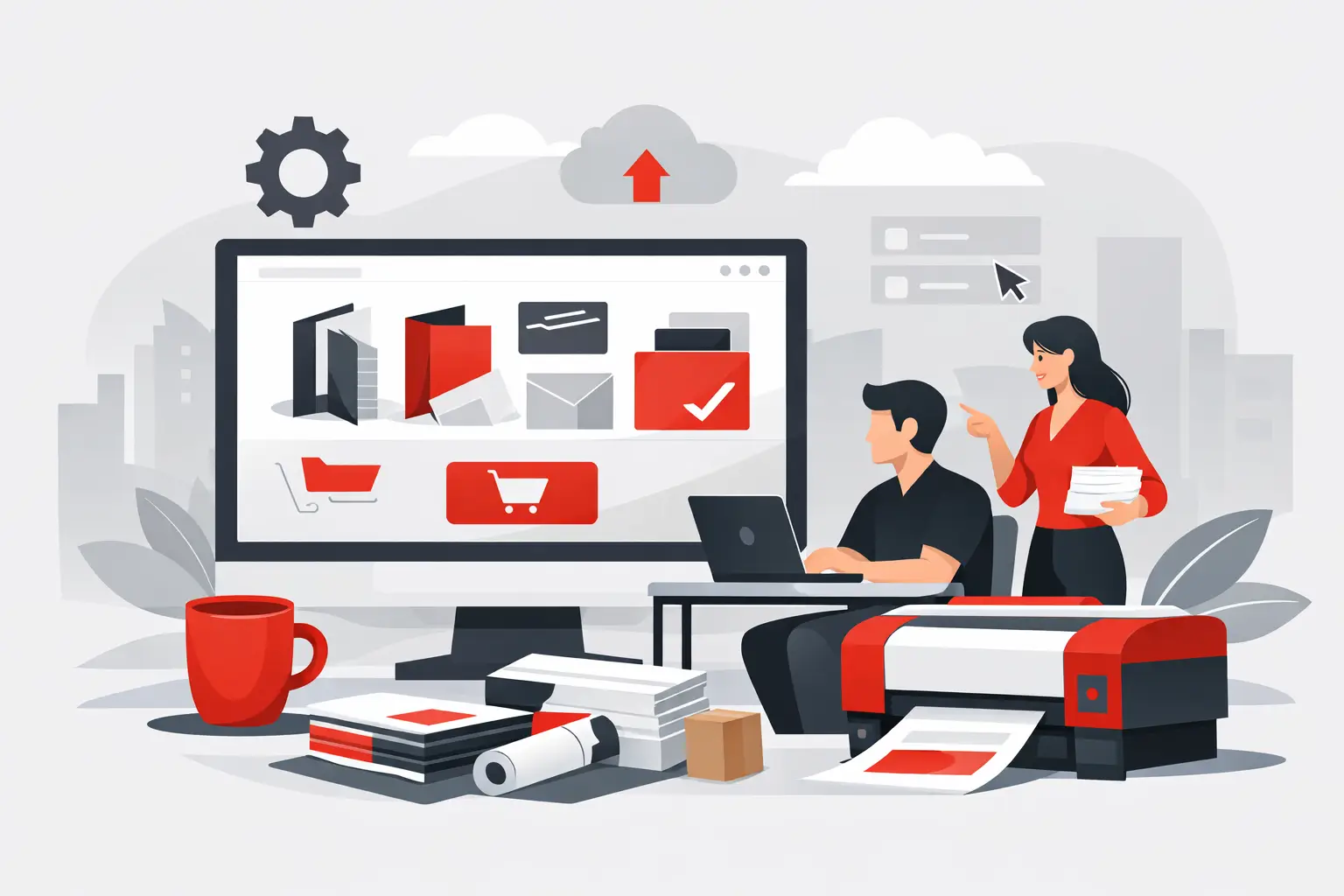
At a practical level, it creates a controlled environment for repeat print purchasing. Instead of every branch, office, or staff member sending separate instructions, they order from approved products and templates. Business cards, flyers, presentation folders, brochures, signage, and branded stationery can all sit in one organized system.
That structure solves several common issues at once. Brand assets stop drifting. Staff stop using outdated files. Ordering becomes faster because product specifications, pricing rules, and delivery details are already built into the process. It also reduces the pressure on one person in marketing or administration to act as the gatekeeper for every order.
This is especially useful for franchise networks and corporate groups. In those environments, local teams need some flexibility, but head office still needs control. A portal can give both. Users can personalize approved templates with local contact details or campaign information while the brand framework stays intact.
The difference between a basic portal and a useful one
Not every online print ordering portal is worth rolling out. Some systems look tidy on the surface but simply move the same confusion into a login page. If the platform is hard to use, lacks product logic, or still requires manual checking at every step, it has not really fixed the problem.
A useful portal should make repeat ordering simple for the customer and manageable for the print partner. That means clear product categories, accurate visuals, sensible customization controls, approval workflows where needed, and account settings that match how the business actually buys print.
It should also support the realities of commercial printing. Some jobs are straightforward reorders. Others involve versioning, variable details, multiple shipping points, or stock and finishing choices that need expert handling. A portal should streamline the routine work without boxing in the more complex jobs.
That is why support still matters. Good systems do not replace service. They make service more effective by removing the avoidable admin and leaving room for the work that actually needs attention.
Who gets the most value from an online print ordering portal
The biggest gains usually show up in businesses with recurring print needs across teams or locations. Real estate groups are a strong example because agents often need business cards, brochures, signboards, window displays, flyers, and branded presentation materials on tight timelines. If every order starts from scratch, delays and inconsistencies are almost guaranteed.
Franchise organizations face a similar issue. Local operators need materials fast, but national brand standards cannot be optional. An online print ordering portal helps keep approved messaging, logos, formats, and product specs in line while still letting individual locations order what they need.
Corporate teams also benefit when procurement is spread across departments. Office managers may order stationery, marketing may need campaign collateral, HR may need event materials, and sales teams may need folders or handouts. Without a system, each group creates its own process. With one, purchasing becomes easier to track and easier to repeat.
Designers and trade print buyers can also benefit, but the portal needs to respect how they work. These users often need technical accuracy, quick reordering, and a clear path for custom production when a job goes beyond standard templates.
Features that matter in day-to-day use
The best portal features are not flashy. They are the ones that remove friction.
Template-based ordering is one of the most valuable. It lets businesses standardize core materials while giving approved users limited fields to update names, phone numbers, offers, or office details. That cuts down artwork errors and shortens production time.
User permissions matter just as much. Not everyone in a business should have the same level of access. Some users may only place orders. Others may approve spend, edit templates, or manage multiple locations. When permissions are set properly, the system supports accountability instead of creating confusion.
Order history is another simple but important function. Teams should be able to reorder previous jobs without rebuilding them. This is particularly useful for frequently used materials where speed matters more than reinvention.
Multi-location delivery options can also save a lot of manual work. If a company regularly sends materials to branch offices, agents, stores, or event sites, the portal should make that easy. The same goes for quoting and budget visibility. Buyers want clarity before they place the order, not after it has gone to print.
Brand control without slowing everyone down
There is always a tension between control and speed. Too much control, and local teams cannot get what they need quickly. Too little, and the brand starts to break apart.
A well-built online print ordering portal handles this better than email-based ordering because the rules are built into the system. Approved templates, locked design elements, preset paper stocks, and guided product options all help protect the brand without forcing every order through head office.
That said, not every product belongs in a fixed-template workflow. Campaign materials, premium presentations, event signage, and custom promotional items often need more collaboration. The smartest approach is usually mixed. Put repeatable, brand-sensitive items in the portal and leave room for custom jobs to be handled with direct support.
That balance tends to work best because it respects real buying behavior. Businesses need efficiency, but they also need someone who can solve problems when the order is not standard.
Why print portals fail after launch
The biggest reason portals fail is simple: they are built around internal assumptions instead of customer use.
If the system is cluttered, difficult to navigate, or packed with too many choices, staff will go around it. If templates are outdated, trust disappears. If approvals are slow, people fall back to email. And if the print partner is not maintaining the portal properly, it becomes shelfware.
Successful portals are actively managed. Products get updated. Templates stay current. User access reflects staffing changes. The ordering path stays clear. This is not glamorous work, but it is what makes the system valuable over time.
It also helps when the portal is backed by a print partner that understands production, not just software. A platform can only do so much on its own. When deadlines tighten, artwork needs checking, or specifications need adjusting, experience matters. That is where a hands-on provider like Dynamite Printing can make the portal more than a convenience tool. It becomes part of a reliable print workflow.
How to judge whether a portal is right for your business
If your print buying is occasional and highly customized, a full portal may be more than you need. Direct support and quoting may be the better fit. But if your team orders recurring branded materials, has multiple users, or needs tighter control over approved assets, the case gets stronger very quickly.
Start with the volume and frequency of repeat jobs. Then look at how many people order, how often files get misused, how much time is lost to approvals, and how often brand inconsistencies show up. Those are the signs that the process needs structure.
It is also worth asking how much flexibility your teams really need. Some businesses assume every order is unique when, in reality, a large share of their print buying follows the same patterns. That repeatability is where a portal delivers the most value.
The right setup is usually not about replacing human support. It is about using technology where it helps and real expertise where it counts. Print works best when both are doing their job.
A good portal should make ordering easier on Monday morning, not just look impressive in a sales demo. If it saves time, protects the brand, and helps your team get quality print out the door without the usual friction, it is doing what it should.