Business Stationery Printing Done Right
A proposal lands on a client’s desk. The logo is crisp, the letterhead feels solid, the envelope matches, and the business card tucked inside looks like it belongs there. That is what business stationery printing is supposed to do – make your brand look organized, credible, and ready for serious work.
For many businesses, stationery gets treated like a small admin purchase. It is anything but. These are the printed items your team uses every week, your customers notice immediately, and your brand is judged by quietly. When they are produced well, they support sales, operations, and brand trust. When they are inconsistent, flimsy, or rushed, they do the opposite.
Why business stationery printing still matters
Digital communication handles speed, but print still carries weight. A printed letter on quality stock feels official in a way a PDF rarely does. A business card handed over in person can still do more for recall than a contact exchange on a phone. Branded notepads, envelopes, and folders make everyday interactions look deliberate rather than thrown together.
That matters most in industries where presentation and reliability are tied together. Real estate agencies, legal firms, finance teams, healthcare providers, franchise groups, and corporate departments all rely on materials that reinforce professionalism. If your printed stationery looks mismatched across locations or departments, customers notice. Internal teams notice too.
There is also a practical side. Well-planned stationery printing helps maintain brand standards, supports repeat ordering, and avoids the cost of constantly fixing inconsistent artwork, sizing, or paper choices. For businesses with multiple staff, branches, or brand managers involved, that control is worth real money.
What counts as business stationery printing?
Most people think of business cards and letterheads first, and those are still core items. But business stationery printing usually covers a broader set of branded materials used for communication, presentation, and administration.
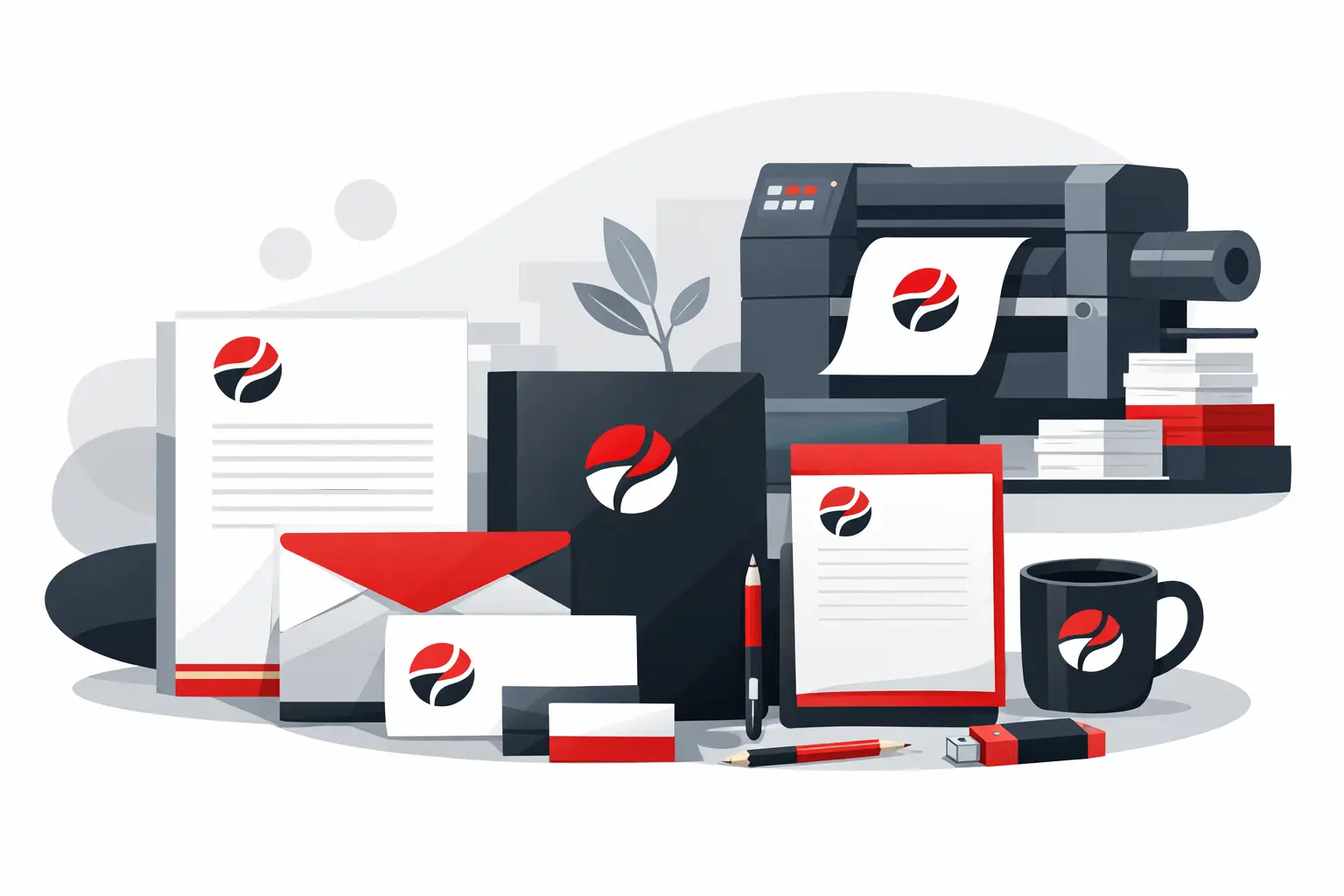
That can include business cards, letterheads, envelopes, with-compliments slips, notepads, presentation folders, NCR books, invoice books, appointment cards, mailing pieces, and branded inserts. Some businesses also fold in labels, forms, or other operational print pieces if they are part of daily customer-facing activity.
The right mix depends on how your team works. A corporate office might need polished folders and letterheads for proposals. A service business may put more value on NCR books, forms, and job sheets. A franchise network often needs the same core items available across multiple locations, with tight control over branding and local details.
Good stationery does three jobs at once
The best stationery is not just attractive. It works hard in three areas at the same time.
First, it supports brand consistency. Your logo, typefaces, colors, spacing, and contact details need to feel connected across every item. If your business cards look modern but your letterhead looks dated, the brand starts to feel fragmented.
Second, it needs to function well. A letterhead must print cleanly through office equipment if teams add variable information in-house. An envelope needs to suit mailing requirements. An NCR book has to copy properly, stay legible, and hold up on the job. Practical performance matters just as much as design.
Third, it should reflect the level of business you want to be known for. Premium paper stock, clean finishing, and accurate color reproduction send a message. So does poor alignment, thin stock, or a logo that prints differently on every item.
How to choose the right stationery set
A common mistake is ordering only what has always been ordered. A better approach is to look at what your team actually uses, what your customers receive, and where consistency matters most.
Start with the essentials. For many businesses, that means business cards, letterheads, and envelopes. Then consider the customer journey. Are proposals leaving the office in branded folders? Are service teams using duplicate books on site? Are welcome packs, invoices, or appointment reminders part of the experience?
This is where expert guidance helps. You may not need ten separate printed items. You may need six, done properly, with artwork set up for easy repeat ordering. On the other hand, if your team is cobbling together forms, loose inserts, and generic office stationery, there may be a clear case for a more complete system.
Design choices that affect the final result
Business stationery design should be clean and disciplined. This is not the place for overcrowded layouts or decorative extras that get in the way of clarity.
Paper stock is one of the biggest decisions. Heavier stock can add authority to business cards and folders, but not every item needs to feel thick and expensive. Letterheads often need a stock that feels professional while still running reliably through office printers. Envelopes need to protect contents and present well in the mail. Notepads need enough body to avoid feeling cheap, but they also need to remain practical for everyday use.
Finish matters too. Uncoated stocks can feel more natural and easier to write on. Coated options can sharpen image reproduction and add a more polished look. Neither is automatically better. It depends on the item, the brand, and how the piece will be used.
Color consistency is another area where shortcuts cause problems. Brand colors that shift from one print run to the next make even strong branding look amateur. If multiple items are being produced together, they should be managed with that consistency in mind.
Where businesses waste money on stationery printing
The cheapest quote is often expensive once reprints, delays, and quality issues show up. Business stationery printing can waste budget in a few predictable ways.
One is poor file setup. If artwork is not prepared correctly, you can end up with fuzzy logos, incorrect margins, mismatched colors, or print areas that do not work with your equipment. Fixing those issues after production starts is slower and more costly than getting them right upfront.
Another is ordering without a clear plan for future use. Businesses often print too much of one item with staff names, phone numbers, or office details that change quickly. That leaves boxes of obsolete stock sitting in storage. In other cases, they print too little and end up paying more through constant short-run reorders.
There is also the issue of fragmented suppliers. If cards, letterheads, folders, and forms all come from different places, brand consistency slips and ordering becomes harder to manage. A single print partner with broad capability can simplify production, keep quality aligned, and reduce admin time.
Business stationery printing for multi-site brands
If you manage multiple offices, franchise locations, or distributed sales teams, stationery is not just a print job. It is a brand control issue.
Templates need to be flexible enough to handle local names, addresses, and contact details without allowing every branch to improvise. Ordering needs to be simple, especially for teams that are busy and not print specialists. Stock levels, approvals, and repeat jobs should not depend on a chain of emails every time someone needs more cards or envelopes.
This is where structured print systems make a difference. Standardized artwork, stored specifications, and managed ordering processes reduce errors and speed things up. For growing organizations, that is often the difference between a controlled brand and a patchwork one.
What to expect from a reliable print partner
A good print partner does more than press print. They help you choose the right specifications, spot production risks early, and make sure the job suits the way your business actually operates.
That includes checking artwork, advising on stock, flagging details that may affect mailing or office printing, and helping balance quality with budget. It also means being responsive when timelines are tight or when a stationery set needs to expand into related items like presentation folders, forms, or mailing components.
For many buyers, reliability is the deciding factor. You need reorders to match previous runs. You need deadlines taken seriously. You need someone who can support both straightforward repeat work and the occasional custom job without making it complicated.
That service mindset is what separates a commodity printer from a real production partner. Companies like Dynamite Printing build value there – not by overcomplicating the process, but by helping customers get the job done right from concept through fulfillment.
Getting better results from your next order
If you are reviewing your stationery, look at it as a working business system rather than a collection of separate items. Check what your team uses, where inconsistencies show up, and which materials actually shape customer perception.
Then make the practical calls. Update outdated templates. Standardize your core pieces. Choose stocks and finishes that suit the job, not just the sample book. Set up artwork properly for repeat ordering. And work with a printer that will tell you when something needs fixing before it becomes a problem.
Business stationery does not need to be flashy to be effective. It needs to be sharp, consistent, and dependable – just like the business behind it. Get that right, and every envelope, card, folder, and form starts doing quiet work on your behalf.