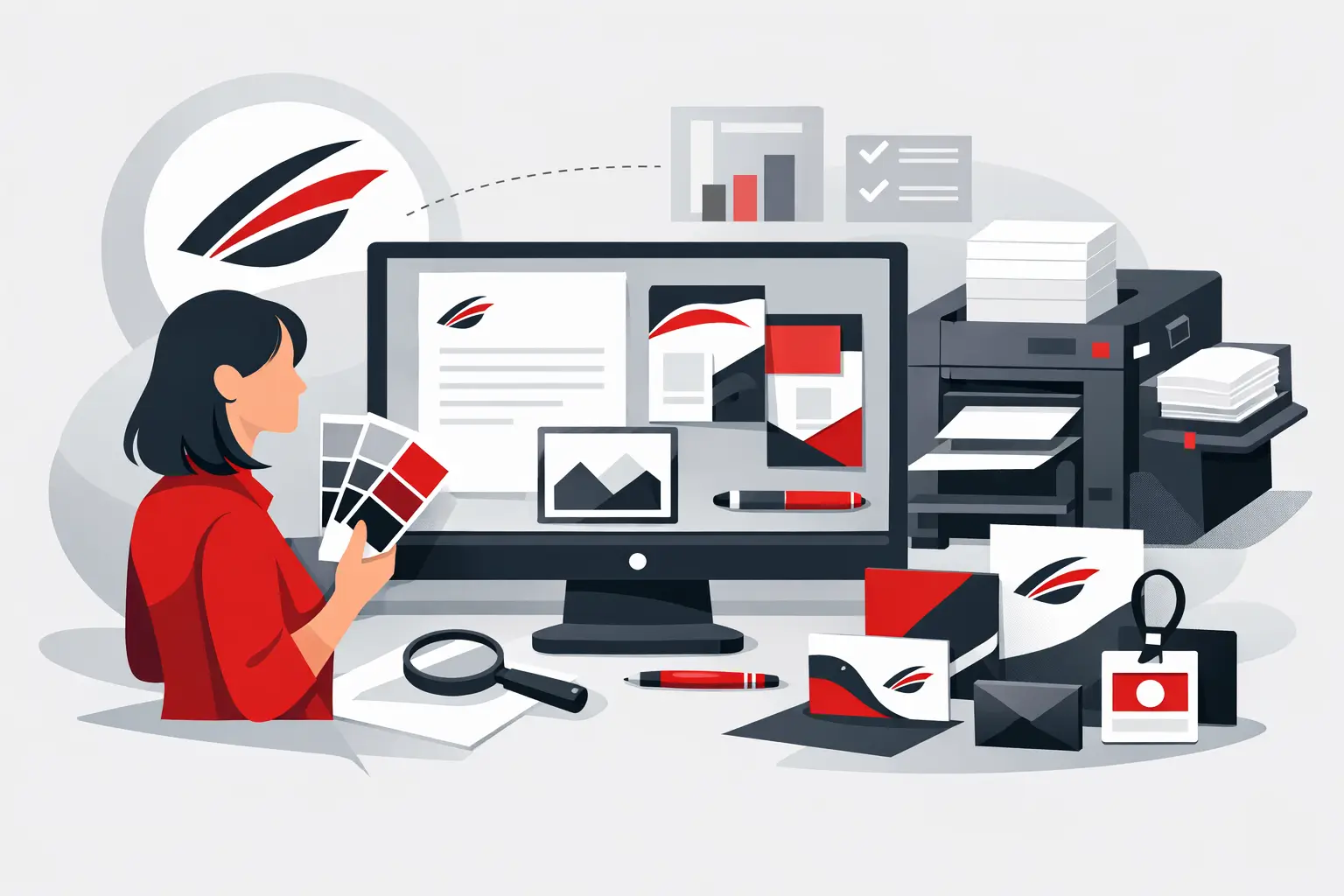
Brand Compliant Print Ordering Guide
One location prints a flyer with the wrong logo. Another branch orders signage in an off-brand color. Head office approves a brochure, but the version sent to print is two revisions old. That is exactly why a brand compliant print ordering guide matters. It is not about adding red tape. It is about making sure every printed piece looks right, gets approved faster, and reaches the market without expensive rework.
For corporate teams, franchise groups, real estate agencies, and busy marketing departments, print ordering can go wrong in predictable ways. Files get pulled from old folders. Specs change between teams. Different buyers use different suppliers. Then the brand starts to drift, job by job. The fix is usually not complicated, but it does require a clear process and a print partner who can keep the details under control.
What brand compliant print ordering actually means
Brand compliance in print means more than placing the right logo on the page. It covers the full set of rules that keep your materials consistent across every format and every order. That includes brand colors, typography, spacing, image use, finishes, paper stocks, signage scale, version control, legal copy, and approval workflows.
In practice, compliance also needs to work in the real world. A brochure may allow premium stock and special finishes, while a high-volume handout might need a more cost-conscious specification. Both can still be on-brand. That is where many businesses get stuck. They treat compliance as a rigid design checklist, when it is really a controlled system with room for practical decisions.
A good system protects the brand without slowing the job down. That balance matters. If ordering approved print is too hard, people will find shortcuts.
Why print orders break brand standards
Most compliance problems do not start in design. They start in process. A marketer is under deadline and sends an old PDF. A local office updates contact details without checking the master artwork. A team member reorders a poster but changes the size, stock, or finish without realizing how that affects the layout and appearance.
The more locations, users, and product types involved, the more likely this becomes. Franchise networks feel it early. So do businesses with multiple sales teams, property offices, events, or frequent campaign rollouts. If you are managing stationery, brochures, signs, direct mail, promotional products, and presentation materials at once, small inconsistencies add up fast.
That is why a brand compliant print ordering guide should cover both creative standards and operational rules. One without the other will not hold.
A practical brand compliant print ordering guide for busy teams
The most effective approach starts before anyone places an order. First, define which items are fixed templates and which are editable. Business cards, letterheads, and standard brochures often work best as locked designs with controlled fields such as names, phone numbers, or office details. Campaign pieces may need more flexibility, but even then, approved versions, layouts, and copy blocks should be clearly identified.
Next, create a single source of truth for artwork. That means current files live in one managed system, not across shared drives, inboxes, and desktop folders. If several people can order print, they should all be pulling from the same approved assets. Version control is one of the simplest ways to prevent repeat mistakes.
Then set print specifications that support the brand. This is where many guides stay too vague. “Use premium paper” is not a production spec. If consistency matters, define the paper weight, finish, size, folding style, binding method, and any finishing requirements. For signage, include dimensions, substrate, installation context, and durability needs. For promotional items, define acceptable print areas, color matching expectations, and fallback options when exact reproduction is not possible.
Approvals also need structure. Decide who can request, who can edit, who can approve, and what requires final signoff. Not every print order needs the same level of review. A reorder of approved stationery should move quickly. A new campaign booklet or large-format display usually needs tighter review. If every job goes through the same approval bottleneck, urgent work gets delayed for no good reason.
Where online ordering helps and where it does not
Online ordering portals can make brand compliance much easier, especially for repeat business print. They reduce file confusion, speed up reorders, and give distributed teams access to approved templates. For franchise groups and multi-site businesses, that can be a major advantage.
But a portal is only as good as the setup behind it. If the templates are outdated, product choices are too broad, or user permissions are loose, the system can still produce off-brand work at scale. A portal should simplify approved ordering, not create new opportunities for error.
This is where a hands-on print partner adds real value. The right support team does not just provide access to products. They help build the logic behind the ordering process, flag production risks early, and keep the specifications aligned with the way the business actually operates.
Getting the specs right before production starts
A lot of costly print problems show up long before the presses run. Low-resolution logos, RGB artwork, missing bleed, incorrect trim size, weak contrast, and mismatched finishes can all affect brand presentation. Some issues are obvious. Others only become visible once the piece is printed, folded, mounted, or displayed under real lighting.
That is why prepress support matters. A proper review should check not only whether the file can print, but whether it will produce the result you expect. Brand compliance is not just about file approval. It is about output quality.
There is also the question of adaptation. A brand that works well on a letterhead may behave differently on an outdoor banner, vehicle graphic, or promotional item. Sizes change. Viewing distance changes. Materials change. You may need to adjust layout, line weight, or color treatment while still staying within brand rules. Good print execution respects the brand but also respects the medium.
How to reduce friction for local offices and field teams
The best compliance systems are practical enough that people will actually use them. If local teams have to email head office for every small order, the process will break under pressure. If they are given free rein, the brand will drift. The answer is controlled flexibility.
Give teams access to approved products they order often. Limit editable fields to the details that genuinely need to change. Keep pricing and turnaround clear. Make it obvious what can be customized and what cannot. When special projects come up, route them to a support team that can advise on artwork, specs, and production.
This is especially useful for businesses with multiple offices or territories. A real estate group, for example, may need consistent brochures, signboards, window displays, presentation folders, and direct mail pieces across many agents and locations. The product set is broad, but the brand still needs to look like one brand. A solid ordering system makes that possible without turning every job into a custom build.
Choosing a print partner that supports compliance
If brand consistency matters, supplier choice matters too. A low-price print vendor may handle a simple run, but repeat brand-critical work needs more than a checkout page. You want a partner who can spot file issues, manage revisions, maintain standards across product types, and help your team make sensible production decisions.
That support becomes even more important when campaigns span multiple formats. A launch might include brochures, posters, banners, presentation packs, direct mail, and promotional merchandise. Each item has different production demands, and yet they still need to feel connected. That takes coordination, not just printing.
This is where a company like Dynamite Printing fits best – not as a commodity supplier, but as a hands-on production partner that helps businesses keep print quality, timing, and brand standards under control.
Build a guide people can follow
If your brand compliant print ordering guide lives in a long PDF no one opens, it will not solve much. Keep it usable. Make the rules clear, the assets current, and the path to order simple. Review it when your branding changes, when new products are added, or when teams keep making the same mistakes.
A strong print process should make life easier, not harder. When the system is set up properly, your teams spend less time chasing approvals, fewer jobs need to be redone, and every printed piece does a better job of representing the business. That kind of consistency is not cosmetic. It saves time, protects budget, and gives customers a more professional experience every time they see your brand.
If your print ordering process feels messy, that is usually a sign the brand rules and production workflow are not aligned yet. Fix that, and the rest gets a lot easier.