A-Frames for Business Visibility
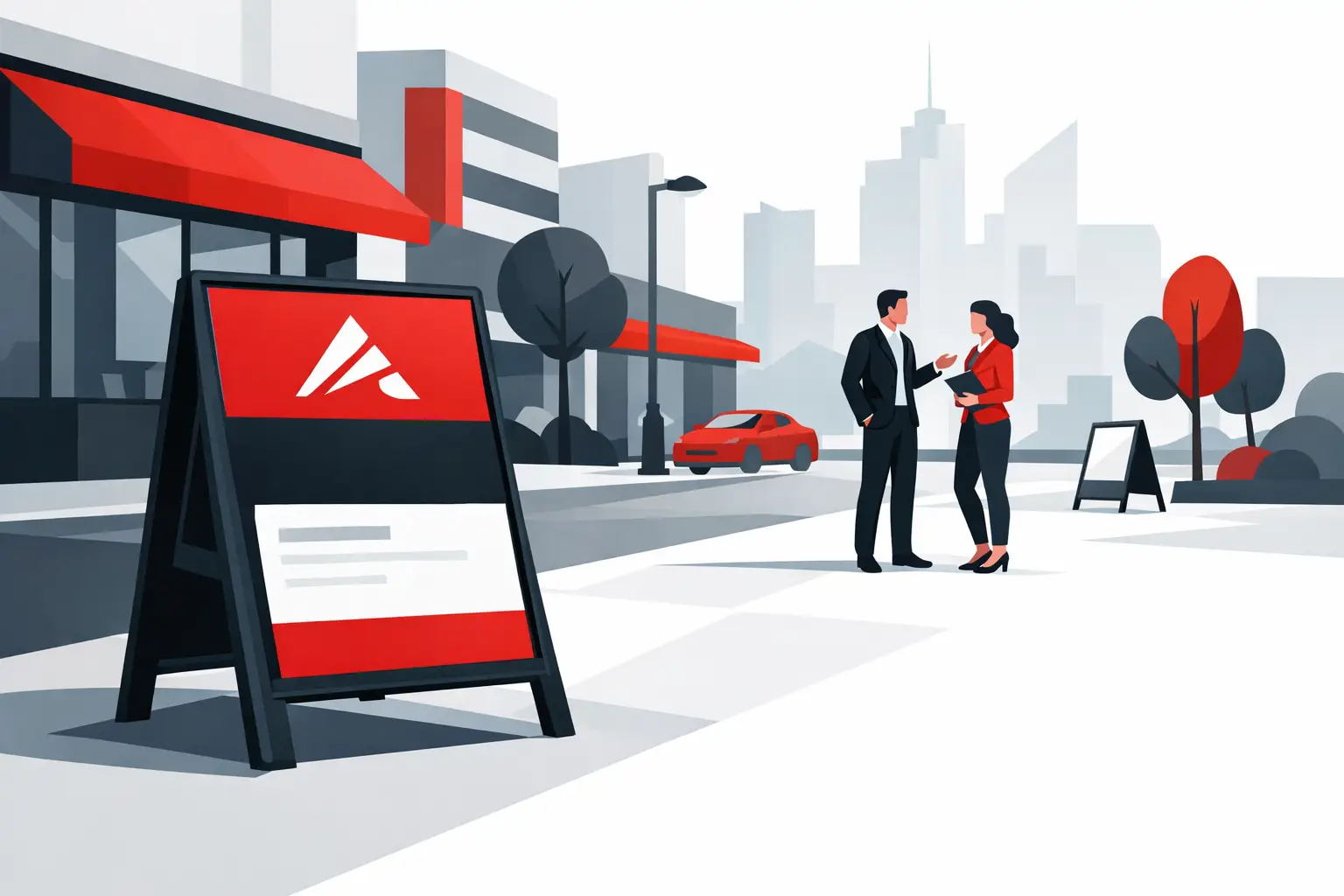
A customer can walk right past your storefront without noticing a sale, a service, or even your business name. That is exactly where a-frames earn their keep. Simple, portable, and highly visible at street level, they do one job extremely well – they get attention where buying decisions actually happen.
For businesses that rely on foot traffic, local awareness, or fast-changing promotions, a-frames are one of the most useful signage tools available. They are not flashy. They are not complicated. But when they are designed and printed properly, they can pull people through the door, reinforce your brand, and support day-to-day sales activity without a big ongoing cost.
Why a-frames still work
A-frames work because they meet people where they are looking. Most pedestrians are not scanning building facades or reading long window graphics from a distance. They are watching the sidewalk, checking traffic, moving quickly, and making decisions in seconds. A well-placed sign at eye-catching height gives them a clear message at exactly the right moment.
That matters for cafes, real estate offices, retailers, medical clinics, gyms, schools, service providers, and event venues. It also matters for larger businesses running local campaigns, temporary activations, or directional messaging. If you need to tell people something now, and you need that message close to the point of action, an a-frame is often the most practical option.
There is also a flexibility advantage. Permanent signage has a role, but it cannot adapt to daily offers, changing stock, open house schedules, event timing, or seasonal messaging. A-frames can. They give your team a simple way to update what customers see outside your business without replacing your whole signage setup.
What businesses use a-frames for
The obvious use is promotions. Daily specials, limited-time offers, new product launches, and event announcements are all strong fits. But that is only part of the picture.
A-frames are also effective for wayfinding. In shopping strips, business parks, and busy mixed-use areas, they help direct visitors to entries, parking, reception desks, and check-in points. For real estate professionals, they support inspections, auctions, and directional signage. For multi-site businesses and franchise groups, they can carry consistent branding while allowing location-specific messaging.
They also help businesses look active. That may sound minor, but it is not. A storefront with a clean, well-designed sidewalk sign signals that the business is open, engaged, and ready to serve. That visible presence can increase trust before a customer even steps inside.
Choosing the right a-frame for the job
Not every a-frame suits every environment. The right choice depends on where it will be used, how often the message changes, and how much wear it needs to handle.
If the sign lives outdoors every day, durability comes first. You need a frame that can handle repeated use, changing weather, and regular movement. Cheap units can look tired fast, especially in high-traffic areas. Hinges loosen, panels warp, and the whole sign starts reflecting badly on the business.
If your messaging changes often, a system with easy graphic replacement makes more sense than a fixed print. That is especially useful for hospitality, events, and real estate. On the other hand, if the message stays stable for long periods, a permanently printed panel can be cost-effective and visually sharper.
Weight matters too. A lightweight sign is easier for staff to move, but if it is too light for the environment, it may shift or tip. A heavier unit offers more stability, though it can be less convenient for teams setting up and packing down each day. There is no universal best option here. It depends on your location, your workflow, and how much handling the sign gets.
Design matters more than most people think
A-frame signage often gets treated like an afterthought. That is a mistake. If the design is cluttered, hard to read, or off-brand, the sign may still attract attention, but not in a way that helps your business.
The best a-frames are direct. They do not try to say everything. They focus on one message, one action, or one offer. That could be a promotion, a direction, a service category, or a call to visit, book, order, or inquire. The wording should be short enough to read while walking past.
Typography matters. So does contrast. If your headline cannot be read quickly from a distance, the sign is doing less than it should. Brand consistency matters too. Even a temporary or promotional sign should still feel like part of your business. Colors, logo use, and layout all shape whether the sign feels professional or improvised.
Images can help, but only when they support the message. Too many visuals reduce clarity. In most cases, a strong headline, clean branding, and one focused point will outperform a crowded layout trying to cover multiple offers at once.
Placement can make or break performance
A well-printed sign in the wrong spot is still a poor result. Placement matters as much as design.
The sign needs to be visible without obstructing pedestrian flow. It should sit where people naturally approach, pause, or make direction choices. Near an entrance is common, but not always best. Sometimes a little farther out gives the message more time to register. In other cases, the best location is where passing traffic slows or where foot traffic turns toward your business.
You also need to think about sightlines. Parked cars, street furniture, planter boxes, and neighboring signs all affect visibility. If the sign blends into visual clutter, its value drops. Good placement takes a practical view of how people move through the area, not just where there happens to be spare space.
Local regulations may apply as well, especially in busy retail precincts or managed centers. It is worth checking the rules before rolling signage onto a sidewalk. A good print partner can often help you think through what is realistic and compliant.
A-frames and brand consistency
For businesses with multiple sites, a-frames can either strengthen the brand or undermine it. That usually comes down to consistency.
If different locations produce their own signage without clear standards, the result is uneven quality, mixed messaging, and a brand that feels fragmented. This is especially risky for franchise groups, real estate networks, and multi-branch businesses where consistency affects trust.
A more effective approach is to create a repeatable signage system. Keep the core branding fixed, then allow selected areas for local messages, offers, agent details, event times, or directional content. That gives local teams flexibility without losing control of the overall presentation.
This is where production support matters. A reliable print partner does more than output graphics. They help make sure the format, materials, color consistency, and replacement process all work at scale and under real operating conditions.
When a-frames are the wrong choice
They are useful, but they are not the answer to every signage need.
If your message needs to be seen from far away, a-frame signage may not carry enough impact. If your site has little or no pedestrian traffic, window signage, wall graphics, banners, or roadside solutions may be a better investment. If your team will not update the sign regularly, a stale message can start to work against you.
There is also the maintenance factor. An a-frame with faded graphics, chipped edges, or outdated offers does not look practical. It looks neglected. Businesses should only use them if they are willing to treat them as active signage, not just something left outside indefinitely.
Getting better results from your signage investment
The strongest results usually come from treating a-frames as part of a broader customer-facing system. They work best when the offer on the sign matches what customers see in the window, at the counter, online, or in printed handouts. Consistency reduces friction. It helps people recognize they are in the right place and makes the message easier to act on.
It also helps to think beyond the first print run. Will you need seasonal updates? Multiple locations? Staff instructions for setup? Replacement panels? Businesses that plan for those practical details usually get better value over time than businesses that buy a sign quickly and figure out the rest later.
For many organizations, that is the real benefit of working with an experienced print supplier. You are not just buying a sign. You are getting help with fit, finish, usability, and production decisions that affect how the sign performs in the real world.
A-frames do not need to be complicated to be effective. They just need to be clear, durable, well placed, and professionally produced. If your business wants a straightforward way to improve visibility, support local marketing, and prompt action at street level, this is one of the hardest-working signs you can put to use. The best signage is not the one that says the most – it is the one that gets noticed and gets results.